Introduction
Sterilization equipment rarely makes headlines, yet it quietly underpins modern healthcare, pharmaceuticals, and even food safety. From hospital operating rooms to biotech labs, the need to eliminate harmful microorganisms has never been more critical. What’s changing now is not just the scale of demand but how sterilization is being done.
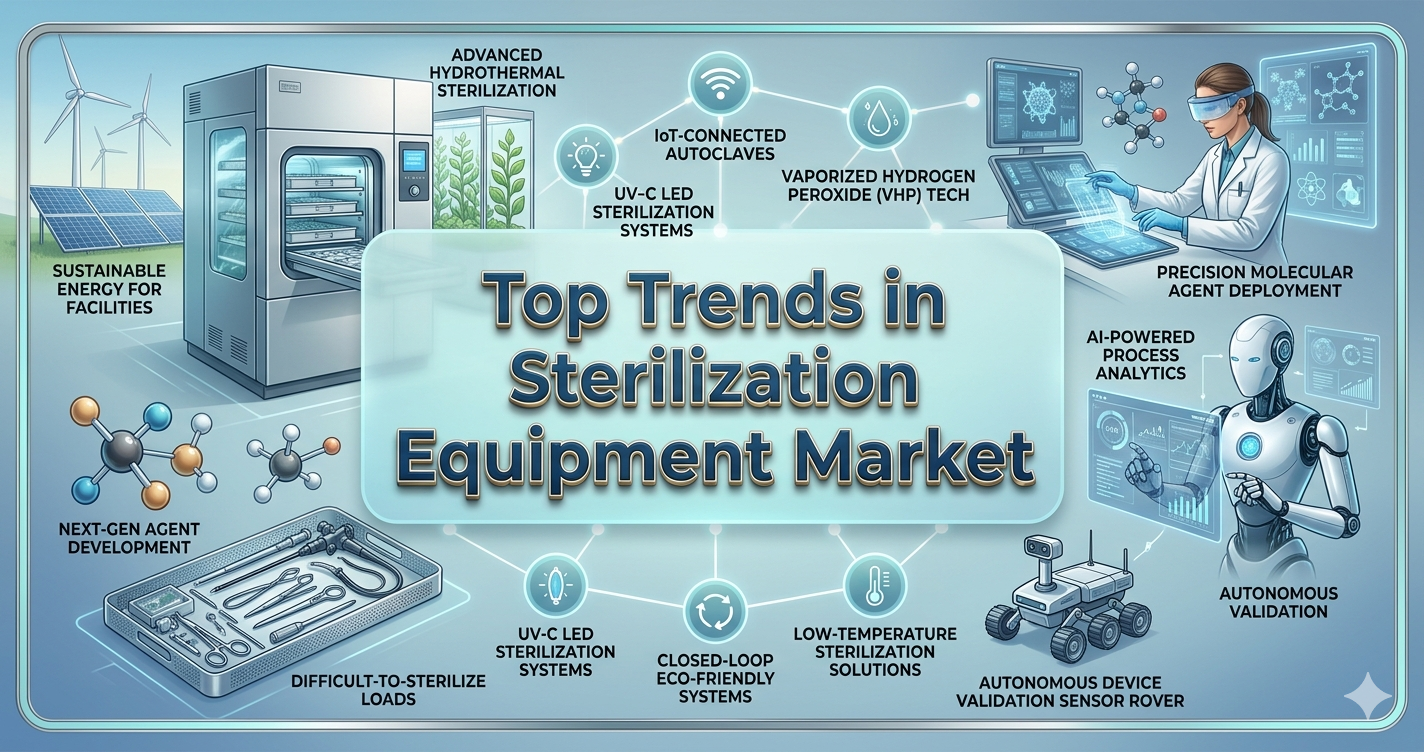
The market is evolving quickly as infection control standards tighten, global health risks remain unpredictable, and industries adopt smarter technologies. What’s driving this shift is a combination of regulatory pressure, technological advancement, and a growing awareness of patient safety. Sterilization is no longer just a compliance requirement it is becoming a strategic investment.
As we move toward 2034, the industry is seeing a transition toward automation, sustainability, and precision-driven solutions. These trends are reshaping not only product innovation but also how companies compete and grow. Understanding these shifts is essential for stakeholders aiming to capture future opportunities.
Market Overview Snapshot
The sterilization equipment market is expanding steadily as healthcare infrastructure grows and infection prevention becomes a top priority worldwide. Demand is being fueled by rising surgical procedures, increased pharmaceutical production, and stricter hygiene standards across industries. Emerging economies are investing heavily in healthcare systems, while developed markets are upgrading to advanced sterilization technologies.
- Market Size (2024): Approximately USD 8.5 Billion
- Forecast Value (2034): Expected to exceed USD 15.5 Billion
- CAGR: Around 6.5%-7.5%
- Key Growth Driver: Rising focus on infection prevention and regulatory compliance
Key Takeaways
- Automation and smart monitoring systems are becoming standard across sterilization processes.
- Low-temperature sterilization is gaining strong momentum due to its compatibility with sensitive medical devices.
- Healthcare-associated infections (HAIs) remain a major factor driving equipment adoption.
- Sustainability is influencing product design, especially in energy-efficient sterilization systems.
- Emerging markets are contributing significantly to demand growth due to infrastructure expansion.
- Integration of digital technologies is improving traceability and compliance management.
Top Trends
1. Shift Toward Low-Temperature Sterilization
- Overview: Low-temperature sterilization methods are gaining popularity, especially for heat-sensitive medical instruments. Traditional steam sterilization can damage delicate equipment, making alternatives such as hydrogen peroxide plasma increasingly important. This trend reflects the growing complexity of modern medical devices.
- Why This Trend is Emerging: The increasing use of advanced surgical tools and electronics requires sterilization methods that preserve functionality while ensuring safety.
- Real-World Example: Hospitals are adopting hydrogen peroxide-based systems to sterilize endoscopes and robotic surgical instruments.
- What It Means for the Market: Equipment manufacturers are investing more in low-temperature technologies, expanding product portfolios.
- What Comes Next: Expect wider adoption across outpatient and specialty clinics, along with improved cycle efficiency.
2. Automation and Smart Sterilization Systems
- Overview: Automation is transforming sterilization workflows by reducing manual intervention and improving consistency. Smart systems now monitor cycles, track performance, and provide real-time alerts, making operations more reliable.
- Why This Trend is Emerging: Hospitals are under pressure to improve efficiency and reduce human error in critical processes.
- Real-World Example: Automated sterilization units integrated with hospital IT systems enable centralized monitoring.
- What It Means for the Market: Vendors offering digital capabilities are gaining a competitive edge.
- What Comes Next: AI-driven predictive maintenance and analytics will further enhance system performance.
3. Rising Demand from Pharmaceutical and Biotech Industries
- Overview: Pharmaceutical and biotech companies are increasingly relying on sterilization equipment to ensure product safety and compliance. The rise of biologics and vaccines has intensified the need for sterile production environments.
- Why This Trend is Emerging: Strict regulatory requirements and growing drug development pipelines are key drivers.
- Real-World Example: Vaccine production facilities are deploying advanced sterilization systems for aseptic processing.
- What It Means for the Market: This sector is becoming a major revenue contributor.
- What Comes Next: Continuous sterilization processes may gain traction in large-scale production.
4. Growing Focus on Infection Control in Healthcare
- Overview: Infection prevention has become a top priority for healthcare providers worldwide. Sterilization equipment plays a central role in reducing healthcare-associated infections.
- Why This Trend is Emerging: Increased awareness and regulatory mandates are pushing hospitals to upgrade sterilization practices.
- Real-World Example: Hospitals are expanding sterilization departments to handle higher volumes of surgical instruments.
- What It Means for the Market: Demand for high-capacity and efficient equipment is rising.
- What Comes Next: Enhanced monitoring systems will ensure compliance and traceability.
5. Sustainability and Eco-Friendly Solutions
- Overview: Sustainability is becoming a key consideration in sterilization equipment design. Manufacturers are focusing on reducing energy consumption and minimizing environmental impact.
- Why This Trend is Emerging: Regulatory pressure and corporate sustainability goals are driving change.
- Real-World Example: New sterilizers use less water and energy while maintaining performance.
- What It Means for the Market: Eco-friendly solutions are gaining preference among buyers.
- What Comes Next: Innovations in green sterilization technologies will accelerate.
6. Expansion of Ambulatory Surgical Centers
- Overview: Ambulatory surgical centers (ASCs) are growing rapidly, creating new demand for compact and efficient sterilization equipment.
- Why This Trend is Emerging: Cost-effective outpatient care is becoming more popular.
- Real-World Example: ASCs are adopting smaller sterilizers designed for limited space.
- What It Means for the Market: Manufacturers are developing tailored solutions for these facilities.
- What Comes Next: Portable and modular systems will gain traction.
7. Integration of IoT and Data Analytics
- Overview: IoT-enabled sterilization equipment allows real-time monitoring and data analysis, improving efficiency and compliance.
- Why This Trend is Emerging: The need for traceability and operational transparency is increasing.
- Real-World Example: Connected sterilizers provide alerts and performance reports.
- What It Means for the Market: Digital capabilities are becoming a key differentiator.
- What Comes Next: Advanced analytics will optimize workflows and reduce downtime.
8. Increased Adoption in Emerging Markets
- Overview: Emerging economies are investing heavily in healthcare infrastructure, driving demand for sterilization equipment.
- Why This Trend is Emerging: Rising healthcare spending and population growth are key factors.
- Real-World Example: Hospitals in Asia-Pacific are upgrading sterilization facilities.
- What It Means for the Market: Growth opportunities are expanding beyond developed regions.
- What Comes Next: Local manufacturing and partnerships will increase.
Download Sample Report Now: Global Sterilization Equipment Market Size And Forecast [2024-2030]
Impact Analysis
The sterilization equipment market is entering a phase of steady transformation, shaped by technology, regulation, and global healthcare demands. These changes are influencing how stakeholders invest, innovate, and compete.
- For Investors:
- Opportunity: Strong growth potential in emerging markets and advanced technologies
- Risk: High capital requirements and regulatory complexity
- For Businesses:
- Strategic shift: Focus on innovation, automation, and sustainability to remain competitive
- For Startups:
- Entry opportunities: Niche solutions such as IoT-enabled systems and eco-friendly technologies
Regional Insights
North America continues to dominate the sterilization equipment market due to advanced healthcare infrastructure and strict regulatory standards. Europe follows closely, driven by strong emphasis on patient safety and sustainability initiatives.
Asia-Pacific is emerging as the fastest-growing region, fueled by expanding healthcare systems, rising medical tourism, and increasing investments in hospitals. Countries like China and India are playing a significant role in this growth.
Meanwhile, Latin America and the Middle East are gradually adopting advanced sterilization technologies, supported by improving healthcare access and government initiatives. These regions present untapped potential for market expansion.
Competitive Landscape
The market is moderately consolidated, with key players focusing on innovation and strategic expansion. Leading companies are investing in advanced technologies, including automation and digital integration, to strengthen their market position.
- Companies are developing next-generation sterilization systems with improved efficiency.
- Partnerships with healthcare providers are helping expand market reach.
- Expansion into emerging markets is a key growth strategy.
- Continuous product innovation is driving competitive differentiation.
Future Outlook
Looking ahead to 2034, the sterilization equipment market is expected to evolve into a highly technology-driven industry. Automation, digital integration, and sustainability will define the next phase of growth. Companies that adapt quickly to these changes will be better positioned to capture emerging opportunities.
Healthcare systems will continue to prioritize infection prevention, while industries such as pharmaceuticals and food processing will increase their reliance on sterilization technologies. The demand for efficient, reliable, and eco-friendly solutions will only intensify.
Another critical factor is the growing role of data and connectivity. Smart sterilization systems will become standard, enabling better monitoring and decision-making. This shift will not only improve operational efficiency but also enhance compliance and safety standards.
Final Thought
The sterilization equipment market is no longer just about meeting hygiene standards it is about enabling safer, more efficient, and more sustainable operations across industries. The trends shaping this market reflect broader changes in healthcare, technology, and global priorities.
For stakeholders, the message is clear: staying ahead requires continuous innovation and a deep understanding of evolving needs. Those who embrace these changes will be well-positioned to succeed in the years ahead.
Frequently Asked Questions
1. What is driving the growth of the sterilization equipment market?
The market is growing due to increased focus on infection control, rising healthcare demand, and technological advancements.
2. Which industries use sterilization equipment the most?
Healthcare, pharmaceuticals, biotechnology, and food processing are the primary users.
3. What are the key technologies in sterilization equipment?
Steam sterilization, low-temperature methods, and IoT-enabled systems are प्रमुख technologies.
4. Which region is expected to grow the fastest?
Asia-Pacific is expected to see the fastest growth due to expanding healthcare infrastructure.
5. What are future opportunities in this market?
Opportunities lie in smart technologies, eco-friendly solutions, and emerging markets.